Called to Serve SVG PNG Christian Shirt
A Designer’s First Look: Clean, Reverent, and Ready for Stitching
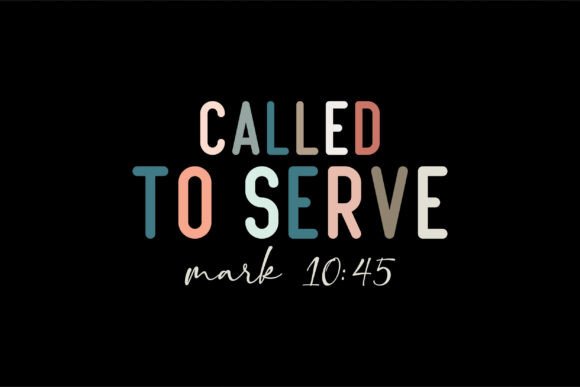
When I opened Called to Serve Svg Png Christian Shirt, my first impression wasn’t about fonts or file formats—it was about *intention*. The composition feels grounded: centered layout, balanced negative space, modest scale, and a quiet confidence in its message. It’s not flashy or ornate, but that’s exactly why it works so well as a machine embroidery design. The lettering is legible at 3–4 inches wide, with gentle curves and consistent stroke weight—no fragile serifs or ultra-thin lines that vanish under satin stitch. As a designer who’s stitched hundreds of faith-based pieces for churches, nonprofits, and personal gifts, I immediately saw where this would shine: on a soft cotton tote bag for a volunteer team, a lightweight apron for a church kitchen, or the chest of a baby onesie for a baptism gift.
Where It Lives Best—And Where It Needs Care
Called to Serve Svg Png Christian Shirt thrives in contexts where sincerity matters more than spectacle. I tested a mockup on a midweight cotton sweatshirt—and yes, it held up beautifully. The stitch density feels intentional, not overloaded: enough fill stitch to read clearly, but not so dense that it stiffens the fabric or causes puckering. It translates cleanly to embroidered patches too, especially when backed with tear-away stabilizer and trimmed neatly. For small shop owners selling boutique merchandise, this design fits naturally into curated collections—think linen tea towels for a Christian home goods line, or pillow covers for nursery decor. It also reads well in holiday embroidery: imagine it stitched in ivory thread on a navy flannel blanket for a pastor’s anniversary gift.
But here’s where experience kicks in: avoid using Called to Serve Svg Png Christian Shirt on highly textured fabrics like bouclé or thick terry cloth without extra stabilization. On stretchy knits (like performance tees), use cutaway + topping to keep letter edges crisp. And while it’s designed for T-Shirt Designs, don’t assume it’s automatically optimized for curved surfaces—caps or beanies will need digitizing adjustments unless the file includes alternate versions. Also, test the smallest detail—the cross motif or subtle underline—on scrap fabric first. If your hoop size is under 4×4 inches, confirm the design fits comfortably without compressing spacing or distorting proportions.
What It Does for Your Craft Business—Beyond the Stitch
This isn’t just another digital embroidery file. It’s a trust signal. When customers see clean, well-proportioned lettering on a handmade product, they subconsciously associate it with care, consistency, and professionalism. That matters whether you’re an Etsy seller listing personalized gifts or a small shop owner branding staff apparel. I’ve seen how Called to Serve Svg Png Christian Shirt elevates perceived value: a simple black cotton tote becomes meaningful when embroidered with this design—not because it’s complex, but because it feels *considered*. Buyers respond to that. They’ll pay more for a finished product that looks intentional, not generic.
For creative entrepreneurs building a cohesive brand, this design supports continuity. Use it across multiple product types—tote bags, aprons, baby blankets—with consistent thread colors (navy, charcoal, or deep burgundy work especially well on light backgrounds), and you create visual recognition without repetition fatigue. And unlike some over-designed faith motifs, it avoids cliché. There’s no glitter effect, no cartoonish halo—it’s dignified, approachable, and quietly timeless. That makes it safer for commercial embroidery projects where tone and audience alignment are non-negotiable.
Practical Notes Every Embroiderer Should Check Before Stitching
- Test on scrap fabric first—especially if using dark or textured materials. What reads well on screen doesn’t always translate to thread-on-fabric clarity.
- Check thread color contrast carefully. Light gray thread on heather charcoal can disappear; go one shade darker or lighter than expected.
- Review stitch density in your embroidery software. If it looks overly solid in the preview, consider reducing fill density by 5–10% for softer drape on apparel.
- Confirm hoop size compatibility. Don’t force a 5-inch-wide version into a 4×4 hoop without checking scaling integrity.
- Inspect small details at 200% zoom—corners, cross endpoints, and spacing between words. Tiny gaps may close up or bleed during stitching.
- Test black-and-white mockups to assess readability on both light and dark backgrounds—this reveals contrast issues early.
- Use proper stabilizer: medium-weight cutaway for knits, tear-away for stable wovens, and fusible + topping for napped fabrics like fleece.
- Verify licensing terms before selling finished items or bundling the file with other design assets. Not all T-Shirt Designs include commercial use rights by default.
Final Thought: A Design That Serves Its Purpose—Literally and Figuratively
As someone who evaluates embroidery files daily—not just for technical soundness, but for emotional resonance and real-world wear—I keep coming back to how Called to Serve Svg Png Christian Shirt honors its own message. It doesn’t shout. It doesn’t distract. It sits calmly on fabric and invites pause. That’s rare. In a market flooded with busy, trend-driven designs, this one earns its place on a volunteer’s apron, a child’s first Bible cover, or a small shop’s seasonal collection—not because it’s perfect, but because it’s purpose-built. It’s the kind of design that reminds us why we stitch in the first place: to make meaning tangible, one thread at a time.